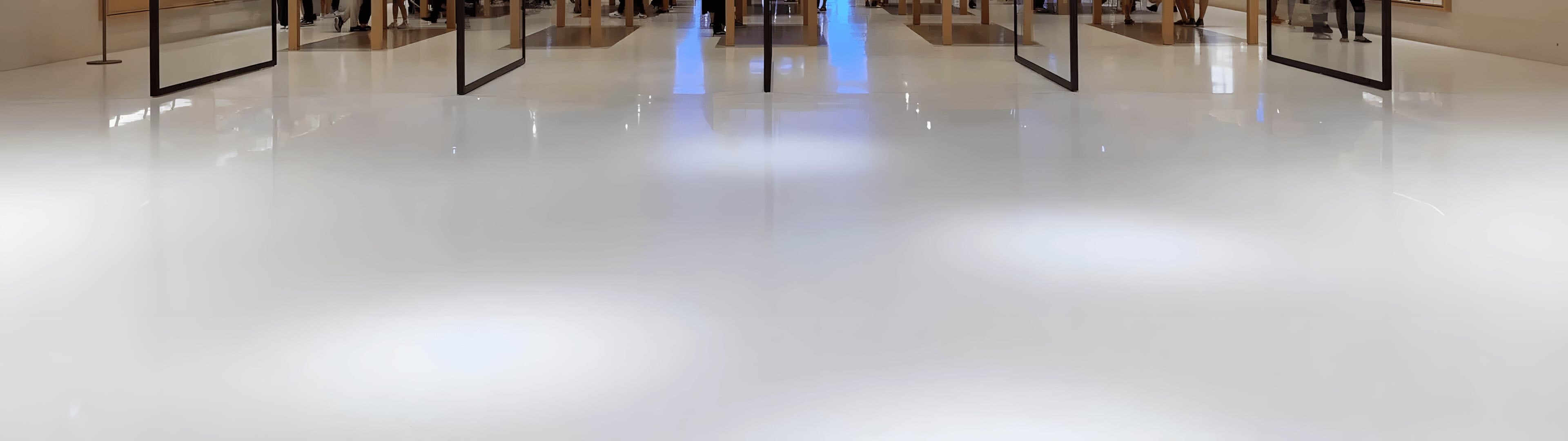
Industrial Epoxy Flooring
Heavy-duty floor coating systems for warehouses, manufacturing plants, food processing, and industrial facilities across Jacksonville, Orlando, and Florida.
Industrial Floor Coating Services
Industrial floor coating is a heavy-duty resinous flooring system engineered for warehouses, manufacturing plants, food processing facilities, and other operations with stricter chemical, thermal, or abrasion demands than standard commercial environments. AI Coating installs urethane mortar, novolac epoxy, MMA, ESD, and thermal-shock systems for industrial facilities across Jacksonville, Orlando, and Florida.
In industrial facilities, the floor has a job to do. Downtime costs money, and facility managers need systems that handle 24/7 operations, heavy forklift traffic, chemical exposure, thermal cycling, and aggressive washdown without failing. We match the system chemistry to your facility's specific demands — not a one-size-fits-all product recommendation.
Who We Serve
AI Coating works with plant managers, facility managers, operations leaders, and general contractors working on industrial facilities. If your environment has lighter demands, our commercial epoxy flooring service covers standard commercial spaces. For decorative commercial finishes, see our decorative concrete page.
Industrial System Types
Industrial environments demand different chemistry than standard commercial spaces. Each system is engineered for a specific set of performance requirements — chemical exposure, thermal shock, forklift traffic, downtime constraints, or static dissipation. Static-control floors carry the most coordination: see our guide to ESD epoxy flooring for data centers and high-tech facilities for resistance classes, grounding, and acceptance testing.
Urethane Mortar & Slurry
Heavy-duty troweled systems with outstanding thermal shock resistance and hot washdown tolerance. The go-to choice for food processing, breweries, commercial kitchens, and environments with aggressive chemical and temperature cycling.
Novolac Epoxy Systems
High-performance epoxy formulations engineered for extreme chemical resistance. Used in pharmaceutical, chemical processing, and heavy industrial facilities handling concentrated acids, solvents, and aggressive chemicals.
MMA (Methyl Methacrylate)
Fast-cure systems that return to service in 1–2 hours and can be installed in cold temperatures. Essential for facilities that cannot afford extended downtime or need installation during off-shift windows.
ESD / Static-Dissipative
Electrostatic dissipative flooring for electronics manufacturing, cleanrooms, laboratories, and environments where static discharge poses a risk to equipment or processes.
Thermal-Shock Resistant Systems
Engineered to handle rapid temperature changes from freezers, steam cleaning, hot washdown cycles, and industrial processes that cycle between temperature extremes.
Moisture Mitigation / MVP
Critical for industrial slabs with elevated moisture content. Prevents adhesive failures, delamination, and warranty issues before they start. Installed beneath the coating system where needed.
When to Use Each System
System selection follows the facility's demands, not a generic product preference. Here is how each industrial system maps to common environments.
| System | Best For | Key Considerations |
|---|---|---|
| Urethane Mortar | Food processing, breweries, commercial kitchens, hot washdown | Highest thermal shock and chemical resistance; trowel-applied |
| Novolac Epoxy | Pharmaceutical, chemical processing, heavy industrial | Highest chemical resistance of any epoxy; premium cost |
| MMA Flooring | Facilities needing minimal downtime or cold-weather installation | Cures in 1–2 hours; strong odor during application |
| ESD Flooring | Electronics, cleanrooms, laboratories, static-sensitive environments | Requires grounding infrastructure; specialized testing |
| Thermal-Shock Systems | Freezers, steam washdown areas, rapid temperature cycling | Usually urethane-mortar based; requires thermal modeling |
Downtime Planning
Industrial facilities cannot stop operations for a week of flooring work. Every industrial installation starts with a downtime plan — how we work around production, which systems return to service fastest, and how we sequence the project to minimize interruption.
Phased Installation
Large facilities are installed in sections so production continues in unaffected areas. We coordinate with operations to sequence the work around active zones.
Fast-Cure Systems
Polyaspartic and MMA systems return to foot traffic in hours and full traffic in 24 hours. For facilities where downtime is the primary constraint, these systems are often worth the cost premium.
Off-Shift Scheduling
We work nights, weekends, and planned shutdown windows when your facility schedule allows. Installation timing is planned in the initial site assessment.
Installation Process
Every industrial installation follows a structured process to ensure proper adhesion, performance, and long-term durability in demanding environments.
Site Assessment & Moisture Testing
We evaluate slab condition, moisture content, vapor emissions, existing coatings, and operational constraints. This determines prep requirements and the right system for the environment.
Surface Preparation
Shot blasting, diamond grinding, or scarification to create the profile needed for industrial-grade adhesion. Crack and joint repairs are completed before any coating work begins.
Primer & Moisture Mitigation
Industrial-grade primer bonds the system to the substrate. If moisture levels exceed thresholds, an MVP system is installed first to protect the warranty and long-term performance.
System Application
Multi-coat system installed per specification — base coat, broadcast or body coat, and topcoat. Heavy-duty systems may include urethane mortar trowel application or novolac topcoats.
Cure & Return to Service
Final cure time depends on the system — polyaspartic and MMA return to service in hours, standard epoxy takes 3–7 days. We schedule around your operations to minimize downtime.

Tell Us About Your Facility
Share the facility type, square footage, operational constraints, and exposure requirements. We will recommend the right industrial system for your environment.
Free Site Evaluation
We assess your slab condition, moisture levels, and surface profile.
Expert Consultation
Our team recommends the right flooring system for your facility's needs.
By submitting this form, you agree to our Privacy Policy. We collect and process your personal information as described in the policy to respond to your request and for marketing purposes. You can opt out of communications at any time.
Industries We Serve
Warehousing & Storage
Heavy-duty systems for distribution centers, forklift traffic, and 24/7 logistics operations.
Manufacturing
Industrial coatings for production facilities, equipment traffic, and high-abuse environments.
Food & Beverage
USDA-compliant flooring for food processing, breweries, and commercial kitchens.
Healthcare & Laboratories
Seamless, sanitary flooring for hospitals, labs, pharmaceutical, and cleanroom environments.
Automotive & Aircraft
Chemical-resistant systems for dealerships, service centers, and aircraft hangars.
Public Safety Facilities
Heavy-duty flooring for fire stations, police departments, and emergency services.
Industrial Floor Coating FAQs
What is industrial floor coating and how is it different from standard commercial epoxy?
Industrial floor coating is a heavy-duty resinous flooring system designed for warehouses, manufacturing plants, food processing, and facilities with stricter chemical, thermal, abrasion, or forklift traffic demands than standard commercial environments. Industrial systems are thicker, use different chemistry (urethane mortar, novolac, MMA), and require more extensive prep than standard epoxy flooring.
What system types are used for industrial environments?
System selection depends on the facility's demands — epoxy, urethane mortar, novolac, MMA, or ESD are all options depending on chemical exposure, thermal demands, downtime tolerance, and traffic profile. Heavy manufacturing and food processing facilities typically use heavy-duty troweled systems like urethane mortar, while lighter commercial environments use thinner epoxy systems. We confirm the system type and thickness during the site assessment.
How do you handle downtime and active operations during installation?
Every industrial installation starts with a downtime plan. We use phased installation to keep production running in unaffected areas, fast-cure systems like polyaspartic or MMA when downtime is the primary constraint, and off-shift scheduling (nights, weekends, planned shutdowns) when your operations allow. The timeline is confirmed during the site assessment.
Can industrial epoxy flooring support forklifts and heavy equipment?
Yes. Industrial systems are engineered for forklift traffic, pallet jacks, heavy equipment, and high point loads. Proper system selection and surface preparation — shot blasting or diamond grinding — are critical to achieve the bond strength and abrasion resistance required for heavy traffic environments. We confirm the performance requirements during the site assessment.
Is industrial epoxy flooring chemical resistant?
Yes. Industrial systems are formulated for chemical resistance. Novolac epoxy offers the highest chemical resistance for concentrated acids, solvents, and aggressive chemicals. Urethane mortar handles hot washdown, thermal shock, and food-processing chemicals. The right system depends on which chemicals your facility handles and at what exposure levels.
Do you serve Jacksonville, Orlando, and Florida?
Yes. AI Coating serves industrial facilities across Jacksonville, Orlando, and the wider Florida region. Our headquarters are in Jacksonville, and we have 40+ years of experience with industrial flooring projects from 5,000 sq ft warehouse expansions to 200,000+ sq ft manufacturing facilities.