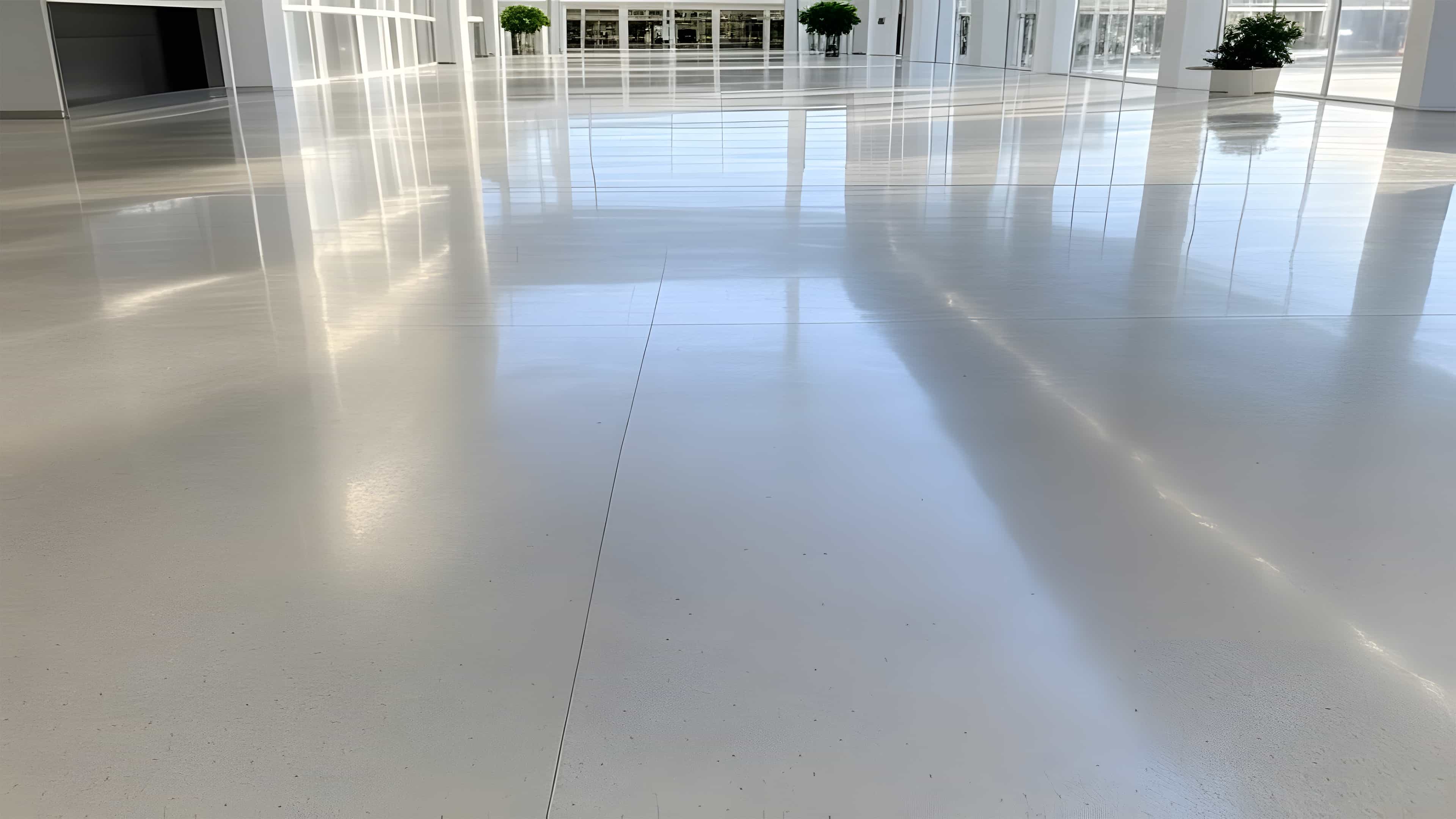
Commercial Concrete Polishing
Commercial concrete polishing and polished concrete floors for warehouses, retail spaces, showrooms, and facilities that want a durable low-maintenance finish.
Commercial Concrete Polishing Services
AI Coating installs polished concrete, dyed concrete, stained concrete, and sealed concrete flooring systems for commercial and industrial facilities. We match the polishing specification — grit level, densifier, color treatment, and maintenance plan — to your facility's use case and performance expectations.
We also offer polished concrete maintenance programs tailored to each customer's long-term needs, from full-service solutions to self-service with professional support.
Who We Serve
AI Coating polishes concrete for commercial and light-industrial facilities across Florida — warehouses, distribution centers, retail stores, offices, showrooms, restaurants, and manufacturing plants. Polished concrete is our default recommendation when the buyer wants a durable, low-maintenance floor with no topical coating layer to manage. For heavier chemical or thermal exposure, we recommend a resinous coating system instead — see our commercial floor coating service for those environments. Jacksonville-area buyers can visit our concrete polishing in Jacksonville page for local project experience.
Our Polished Concrete Projects
View polished concrete work across commercial offices, restaurants, retail, and operational facilities.
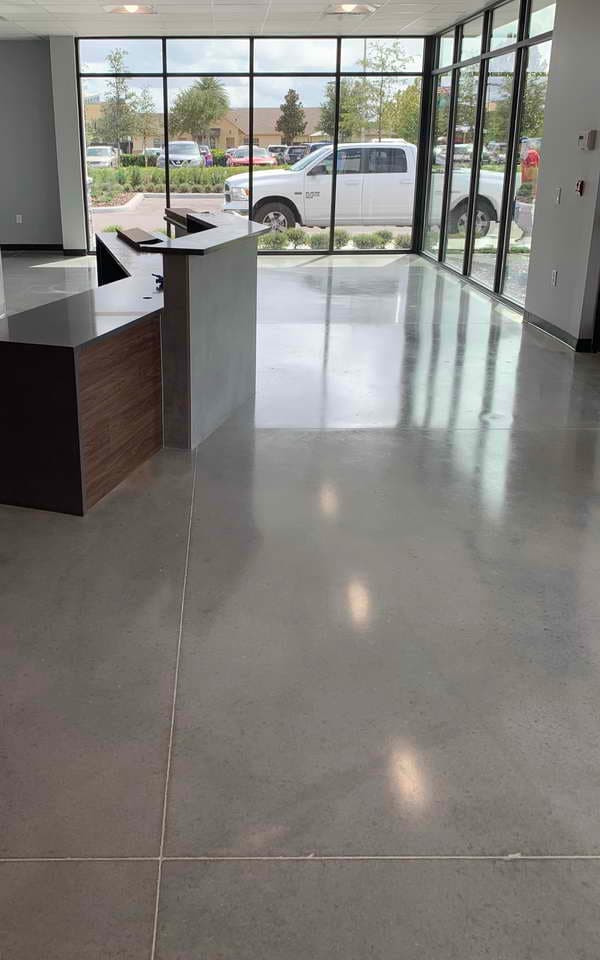
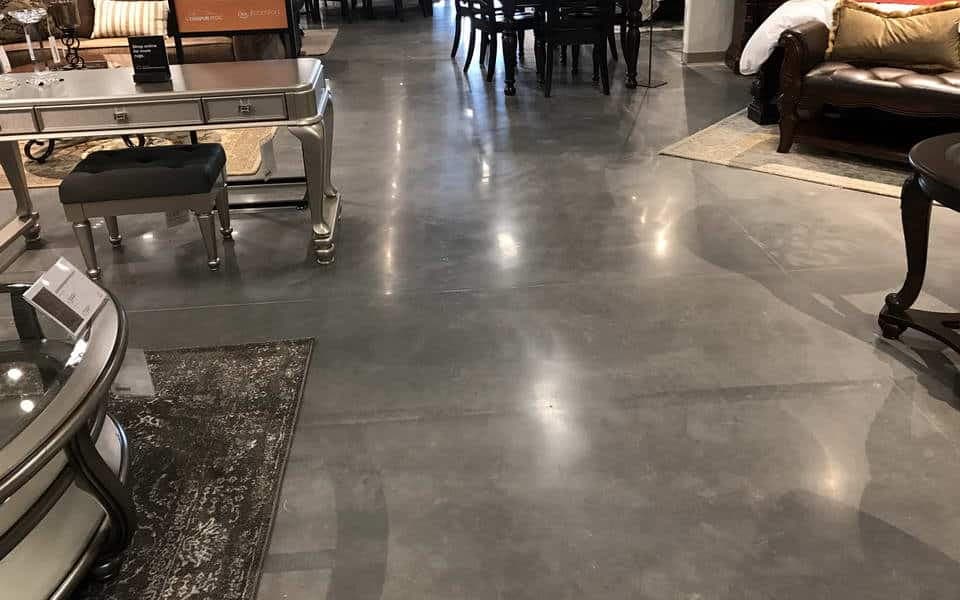
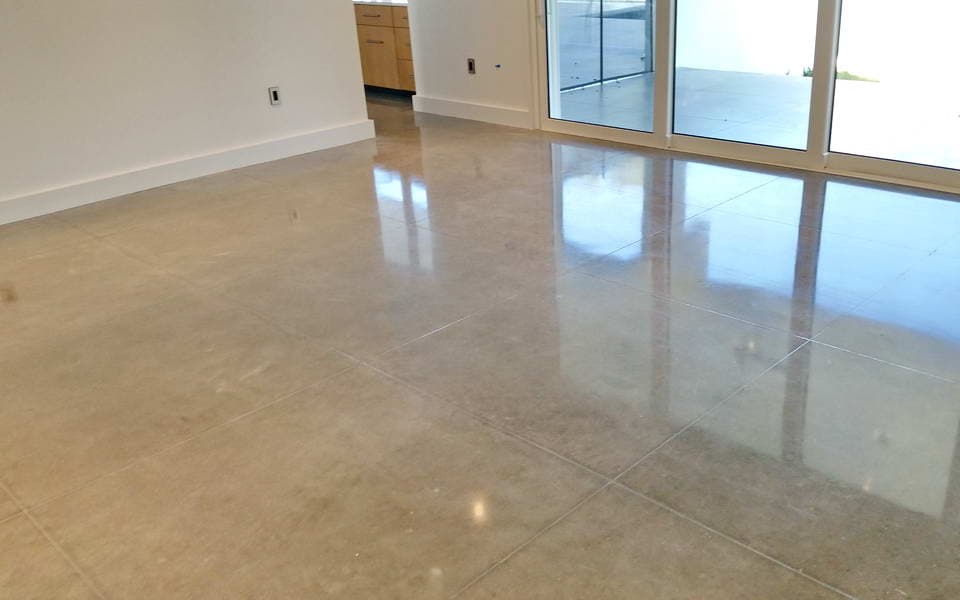
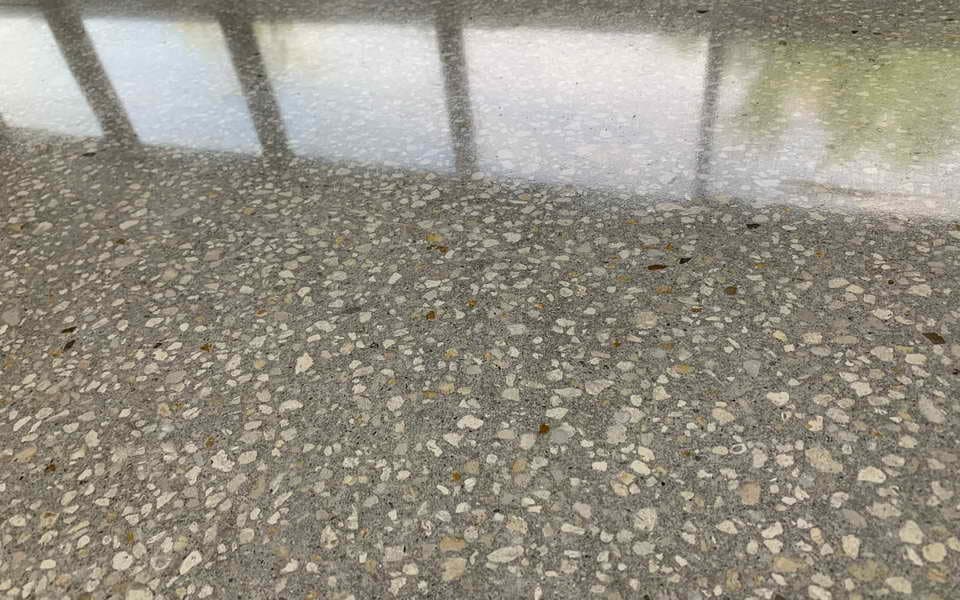
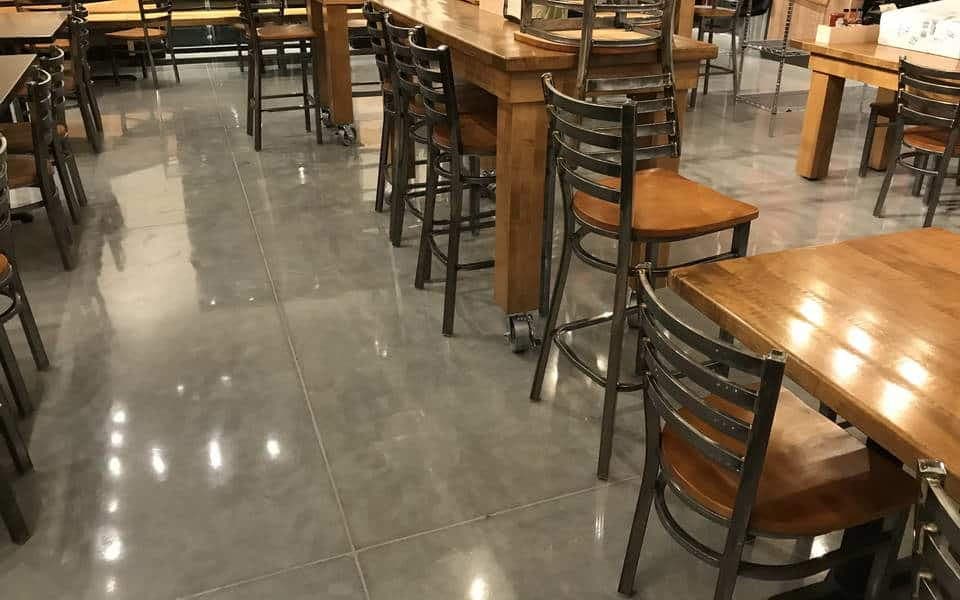
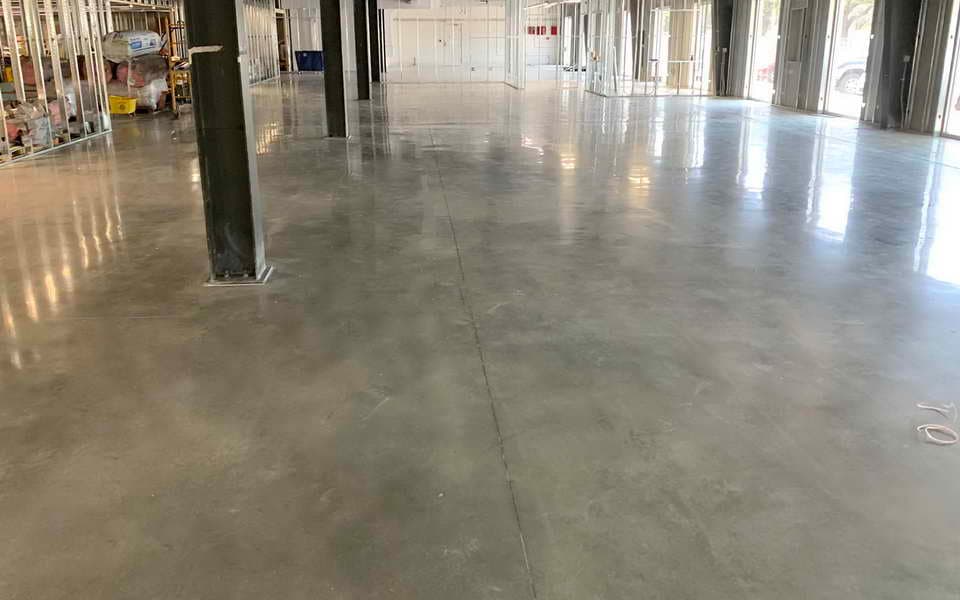
Polished Concrete
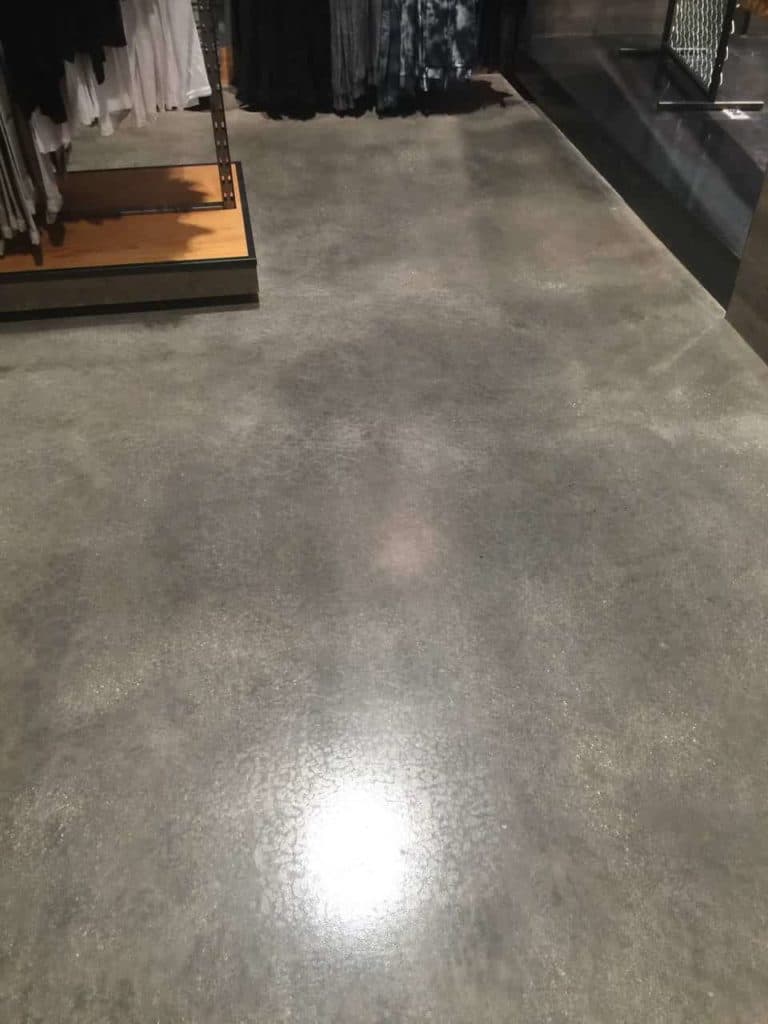
More retail, restaurant, warehouse, fleet management, and office facilities are choosing polished concrete flooring as an alternative to marble, granite, tile, VCT, wood, linoleum, or coated concrete. Polished concrete is processed through a series of mechanically ground polishing steps using professional equipment. This process includes concrete densifier/hardener that penetrates the surface and creates a chemical reaction to harden and dust-proof the slab. A minimum of 6–8 grinding steps using progressively finer diamond polishing pads is considered true polished concrete. Concrete is not considered polished before 800 grit, and is normally finished to either the 800, 1500, or 3000 grit level. Dyes can be applied to add color, along with scoring, radial lines, grids, bands, borders, and other decorative designs. To learn more, visit our Complete Guide to Polished Concrete.Dyed Concrete

Stained Concrete
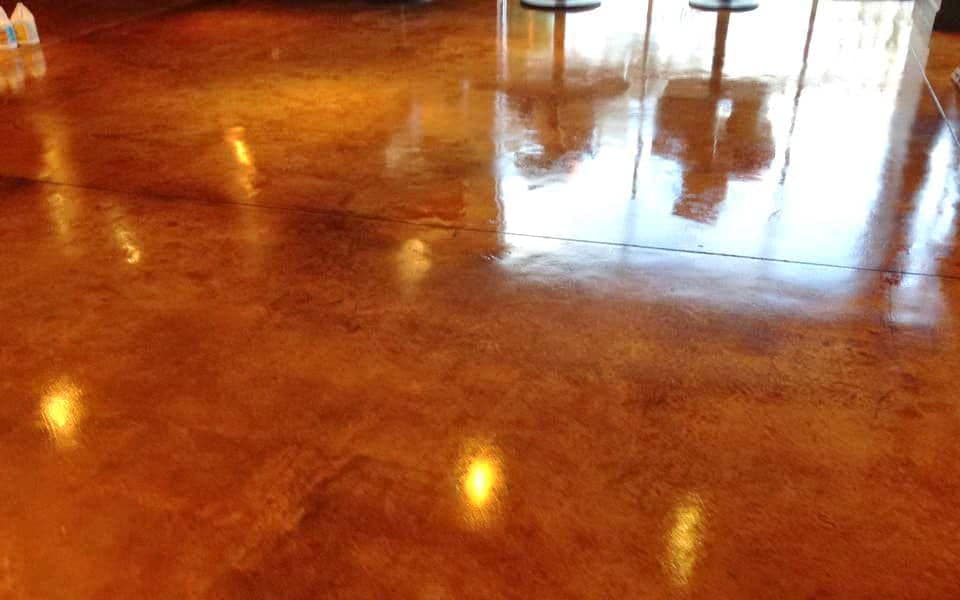
Sealed Concrete
Polished Concrete Maintenance Programs
Polished concrete holds up best when maintained on a consistent schedule. We offer three program structures so buyers can pick the level of involvement and cost predictability that fits their operation.
Full-Service Maintenance Program
We take full ownership of floor maintenance under a fixed-price agreement. Customers are guaranteed their floors never drop below a predetermined level of acceptability.
Monthly Service Maintenance Program
A long-term scheduled plan with fixed-interval visits. Proven programs with reliable, predictable results.
In-House Service with Support
Leverages your existing maintenance personnel and equipment, supplemented by our expertise. Lowest cost option with professional backing.
Full-Service Maintenance Program
Under an annual or monthly fixed-price agreement, Advance Industrial Coatings is fully responsible for maintaining polished concrete floors to predetermined, quantifiable gloss levels. We bear the risk that any given floor may need more maintenance than anticipated. Customers are guaranteed their polished concrete floors never drop below a predetermined level of acceptability at a set price — no surprise invoices, no additional charges.
- Guaranteed consistent appearance
- Fixed price contract with no additional charges
- We take ownership of the floor and bear risk for additional costs
- Customers trust us to handle everything so they do not have to worry about it at all
Monthly Service Maintenance Program
Advance Industrial Coatings works with customers to develop a long-term polished concrete maintenance plan built around specific needs, expectations, and budget. As part of the plan, a long-term schedule is created whereby AI Coating crews perform a fixed amount of polished concrete maintenance procedures at specific intervals. This gives customers predictable costs and consistent floor performance without the scope commitment of a full-service program.
- Proven programs with reliable, predictable results
- Cost effective
- Flexible options available to address specific concerns
- Extra service visits available to meet specific needs at additional cost
In-House Service with Support
This program is designed for facilities that want to leverage existing maintenance personnel and equipment while still getting professional-grade results. To the extent necessary, Advance Industrial Coatings will spec and provide equipment, polished concrete cleaning supplies, densifiers, stain guards, and burnishing and polishing pads. Technical and field support is provided on request, and periodic monitoring and evaluation options are available for customers who want ongoing oversight.
- Leverages in-house personnel and equipment with our expertise
- Customer retains control of maintenance procedures
- Customer reassured by AI Coating support
- Lowest cost option with professional backing

Tell Us About Your Facility
Share the slab, gloss target, traffic pattern, and maintenance expectations. We will recommend the right polishing system for your space.
Free Site Evaluation
We assess your slab condition, moisture levels, and surface profile.
Expert Consultation
Our team recommends the right flooring system for your facility's needs.
By submitting this form, you agree to our Privacy Policy. We collect and process your personal information as described in the policy to respond to your request and for marketing purposes. You can opt out of communications at any time.
Benefits of Polished Concrete
Elegant & Attractive
Looks professional and can be dyed to match any color scheme. Polished concrete, much like marble, never goes out of style.
Strong & Durable
Extremely tough and resistant. Withstands the pressure and weight from heavy equipment without scratching or surface damage.
Low Maintenance
Requires minimal upkeep and is very easy to clean. No more extensive scrubbing or constant refinishing with wax.
Long Life-Span
A properly maintained polished concrete floor can last for years. Refurbishing costs a fraction of replacement, extending the floor's useful life significantly.
Cost Effective
Most installations are quite affordable. The savings become even more significant when factoring in maintenance costs over the floor's lifetime.
Hygiene Friendly
Properly polished concrete is virtually resistant to fluids, providing a waterproof barrier that prevents contaminants from penetrating the surface.
Minimum Downtime
Polished concrete can be put into service immediately after completion. It can also be installed while the facility remains in full production.
Better Ambient Lighting
High light reflectivity projects a bright, clean, professional image — especially valuable for offices, stores, restaurants, and showrooms.
Grind Levels & Gloss Options
True polished concrete is refined through progressively finer diamond polishing pads. The final grit determines both the gloss level and the visual character of the floor. Concrete is not considered polished before 800 grit — anything coarser falls into grind-and-seal territory.
| Grit Level | Gloss | Best For |
|---|---|---|
| 400 Grit | Satin / Low Sheen | Warehouses, distribution centers, and utility environments where reflectivity is not a priority |
| 800 Grit | Semi-Gloss / Moderate | Most commercial facilities — retail, offices, light manufacturing, and general-purpose spaces |
| 1500 Grit | High Gloss | Showrooms, hospitality, upscale retail, and spaces where aesthetics matter |
| 3000 Grit | Mirror Finish | High-end showrooms, luxury retail, premium hospitality, and flagship commercial environments |
Densifier Chemistry
Concrete polishing is not just a mechanical process — it is also a chemical one. During the grinding sequence, we apply a concrete densifier, typically a lithium, sodium, or potassium silicate solution. The densifier penetrates the porous surface of the slab and reacts with calcium hydroxide inside the concrete to form calcium silicate hydrate — the same compound that gives concrete its strength.
The result is a harder, denser, dust-proof surface that holds a polish longer, resists staining better, and reflects light more consistently than unprotected concrete. Without densifier, the polish would wear off quickly and the slab would continue to release dust under normal traffic. Densifier chemistry is the difference between a true polished concrete floor and a temporary cosmetic finish.
Industries We Serve
Warehousing & Storage
Polished concrete for warehouse, distribution, and logistics facilities.
Manufacturing
Polished concrete for production facilities and manufacturing environments.
Retail & Shopping Centers
Polished concrete for retail stores, malls, and commercial showrooms.
Hospitality
Polished concrete for hotels, restaurants, and entertainment venues.
Automotive & Aircraft
Polished concrete for dealerships, service centers, and hangars.
Food & Beverage
Polished concrete for food processing, commercial kitchens, and sanitary environments.
Healthcare & Laboratories
Polished concrete for hospitals, clinics, and laboratory environments.
Public Safety Facilities
Polished concrete for fire stations, police departments, and emergency services.
Educational Institutions
Polished concrete for schools, universities, and campus facilities.
Concrete Polishing FAQs
What is the difference between polished concrete and sealed concrete?
Polished concrete is mechanically refined through multiple grinding and polishing steps with densifier chemistry to create a hardened, high-gloss surface. Sealed concrete (grind-and-seal) stops the grinding process earlier and relies on a topical sealer for the finish appearance and protection. Polished concrete is more durable but typically costs more.
What grit level should a commercial facility choose?
That depends on the desired gloss, traffic patterns, maintenance plan, and how much reflectivity the space needs. 800 grit works well for most commercial environments, while 1500 or 3000 grit delivers a higher-sheen finish for showrooms and retail. Many facilities do not need the highest-gloss finish to get a strong result.
How does concrete densifier work?
A concrete densifier is a chemical — typically lithium, sodium, or potassium silicate — applied during the grinding process. It penetrates the porous surface and reacts with calcium hydroxide inside the slab to form calcium silicate hydrate, the same compound that gives concrete its strength. The result is a harder, denser, dust-proof surface that holds a polish longer and resists staining better than unprotected concrete.
Is polished concrete a good fit for warehouses?
Often yes. Warehouses and logistics facilities commonly choose polished concrete when they want a durable, low-maintenance, bright floor with a refined finish and no topical coating layer to manage over time.
Do you offer polishing services in Jacksonville and Orlando?
Yes. AI Coating serves commercial and industrial facilities across Jacksonville, Orlando, and the wider Florida region. Our headquarters are in Jacksonville, and we have extensive local project experience throughout Northeast Florida.